What it means when Siri pulls from Google AI and Google search data
When someone asks Siri for help, two big steps are happening behind the scenes:
First, Siri has to understand what the person means. A request like “AC is leaking water, who can come today?” has intent, urgency, and location baked into it. Better AI models help Siri interpret that correctly.
Second, Siri has to answer. And for local answers, the assistant needs sources with complete business information: names, locations, hours, services, and proof that a business is real. That’s where Google’s ecosystem shows up again and again: Google Search, Google Maps, and business listings.
Recent reporting points to Apple working on a more chatbot-like Siri and using Google’s Gemini models in future Siri and Apple Intelligence features. If you want the tech coverage, here’s a helpful summary from Search Engine Land’s report on the Siri and Gemini deal, along with TechCrunch’s coverage of Apple’s Siri chatbot plans.
For local service businesses, this isn’t about hype. It’s about where your information lives. If your GBP is incomplete or messy, you’re feeding the system weak signals. If your GBP is accurate and active, you’re giving phones what they need to recommend you with confidence.
Why this makes iPhone and Android local search feel more like one playing field
Potential customers don’t think in terms of operating systems. They think in terms of “I need someone now.”
In the US, iPhone has a big share of the market, while Android leads globally. The key point for a local business is simpler than market share charts: Google is a major source of local business data that people see across devices and apps.
That’s why your GBP can act like a common foundation. It supports:
- Google Search results on any phone
- Google Maps on iPhone and Android
- Local “best option” style suggestions when systems pull from Google’s local database
So instead of building your visibility separately for iPhone users and Android users, GBP gives you a single place to strengthen your presence, as long as the information is correct and kept fresh. In search engine results powered by this data, customers make their choices quickly.
The 10-second decision: how customers choose a service company from a search result
Think about what happens when someone’s water heater quits. They’re not reading your “About” page. They’re scanning.
Most customers decide in about 10 seconds, based on quick trust signals, such as:
- Star rating and customer reviews count
- Recent customer reviews that mention the exact service
- Photos that look real (trucks, staff, job sites, finished work)
- Clear service categories (plumber, HVAC contractor, electrician)
- Operating hours that match their urgency (open now matters)
- A visible phone number and tap-to-call button
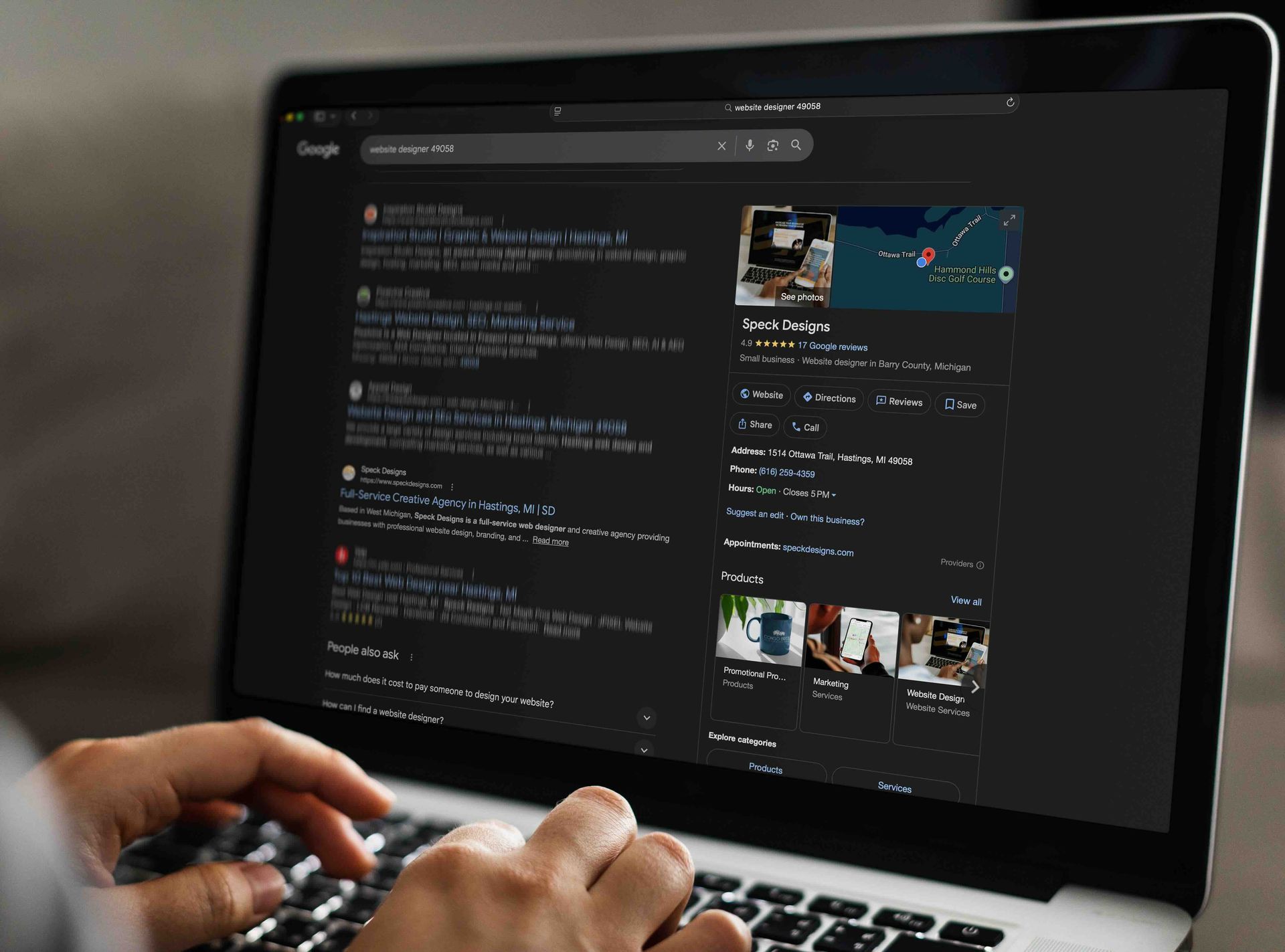
Your Google Business Profile is often the first impression, sometimes the only impression. Many leads never touch your website. They call straight from the listing, request directions, or send a message.
If that profile looks neglected, customers assume the business is too.
Google Business Profile is the easiest way to win more local jobs, but most businesses still ignore it
Google Business Profile is a free service that's easy to access with just a Google account, but many service businesses still fail to “claim your business” or “verify your business”. Or it's "set and forget," which quietly turns into wrong info, stale photos, and missed calls, hurting your online reputation.
Here's what that looks like in real life:
- Your competitor has fewer skills than you, but their Google listing shows a steady stream of new customer reviews and recent photos. Their hours are accurate. Their services are listed clearly. They look alive, responsive, and ready to help.
You might be the better choice, but you don't look like it in the search results.
If you want a simple idea of what Google wants businesses to include this year, this 2026 GBP checklist article does a solid job describing what customers (and Google) tend to respond to. And if you're curious how rankings are influenced, this guide on 2026 Google Maps ranking factors outlines the basics in plain language.
The biggest issue isn't that Google Business Profile is "hard." It's that it's ongoing. Service businesses are busy. Phones ring, crews are out, suppliers are late, and the day disappears. GBP maintenance becomes "I'll get to it later," until later costs you money.
Common GBP mistakes that quietly leak calls to your competitors
Most profiles don't fail because of one big error. They fail from a dozen small ones.
Here are common issues that cause lost leads:
- Wrong primary category, or choosing something vague that doesn't match your money services
- No service area listed (or service areas that are too broad to feel local)
- Weak service descriptions that don't match how people search
- Missing appointment or estimate link
- Outdated photos and logos, or no photos beyond the logo
- NAP issues (name, address, phone) where business information doesn't match your website and directories
- Never posting updates (which signals inactivity)
- Not adding products and services (even for service companies)
- Ignoring the Q and A section, where negative reviews can sit for months
- Not watching for public edits, which can change your hours or phone number
None of this is complicated, but it's easy to miss when you're running jobs all day.
A simple checklist for a strong GBP that ranks and converts
A strong Google Business Profile does two jobs at once: it helps you show up, and it helps you turn views into calls.
A healthy setup usually includes:
- Correct primary category and a few supporting categories that match real services
- Service areas that reflect where you actually send trucks
- A complete services list written for humans (clear, short, and honest)
- A business description that sounds natural, with light keyword use
- Real photos added monthly (teams, equipment, job sites, before and after)
- Accurate operating hours, including holiday hours
- A review plan with customer reviews (ask after a win, make it easy, be consistent)
- Fast replies to respond to reviews (even short ones), with a calm tone
- Basic tracking links so you can tell what's working
- Regular updates (posts, offers, seasonal reminders) so the profile stays active and builds more customer reviews
GBP is "free," but doing it well takes a routine. If you don't put it on a calendar, it doesn't happen. And in competitive markets, that gap gets punished quickly.