


How to Build Service Area Pages That Rank in Google

SD Team • April 21, 2026

Prefer to listen to this blog post?

Website Service Area Pages are a powerful growth engine for local SEO in home services. When done right, a well-optimized service area page acts as a digital satellite office, pulling in high-intent leads from surrounding towns where you don't have a physical location. However, many businesses treat these pages as afterthoughts, resulting in thin, ineffective content. To actually capture local traffic, your pages must be useful and local, serving as authentic resources that provide clear value to both potential customers and search engines.


Building these pages is often where businesses get stuck.

  • Do you create one for every town?
  • Should the content be identical?
  • Most importantly, how do you avoid the dreaded "doorway page" penalty?
  • To capture local traffic, you need a strategy that prioritizes intent and authenticity over mass-producing thin, automated content.


Quick search phrases people use for home services

  • plumber in Grand Rapids
  • roofing company near Kalamazoo
  • electrician serving Barry County
  • HVAC repair in Hastings MI


If you serve customers across multiple cities, you need pages that match real search intent in each place. That's better for Google, and it's also easier for AI tools to quote when they summarize local options.

Key Takeaways

  • Build service area pages that feel useful and local, matching real search intent like "plumber in Grand Rapids"; avoid thin, copied content Google spots as doorway pages.


  • Start with top markets backed by proof like past jobs and calls; test 2-3 strong pages before expanding to see rankings in local search results, traffic, and leads.


  • Write unique content with local specifics (neighborhoods, weather issues, reviews, photos) to build trust and make pages citable by Google and AI tools.


  • Structure for scanability: clear titles, H1, short intro, subheads, FAQ, schema, internal links, and align with your Google Business Profile for local relevance.
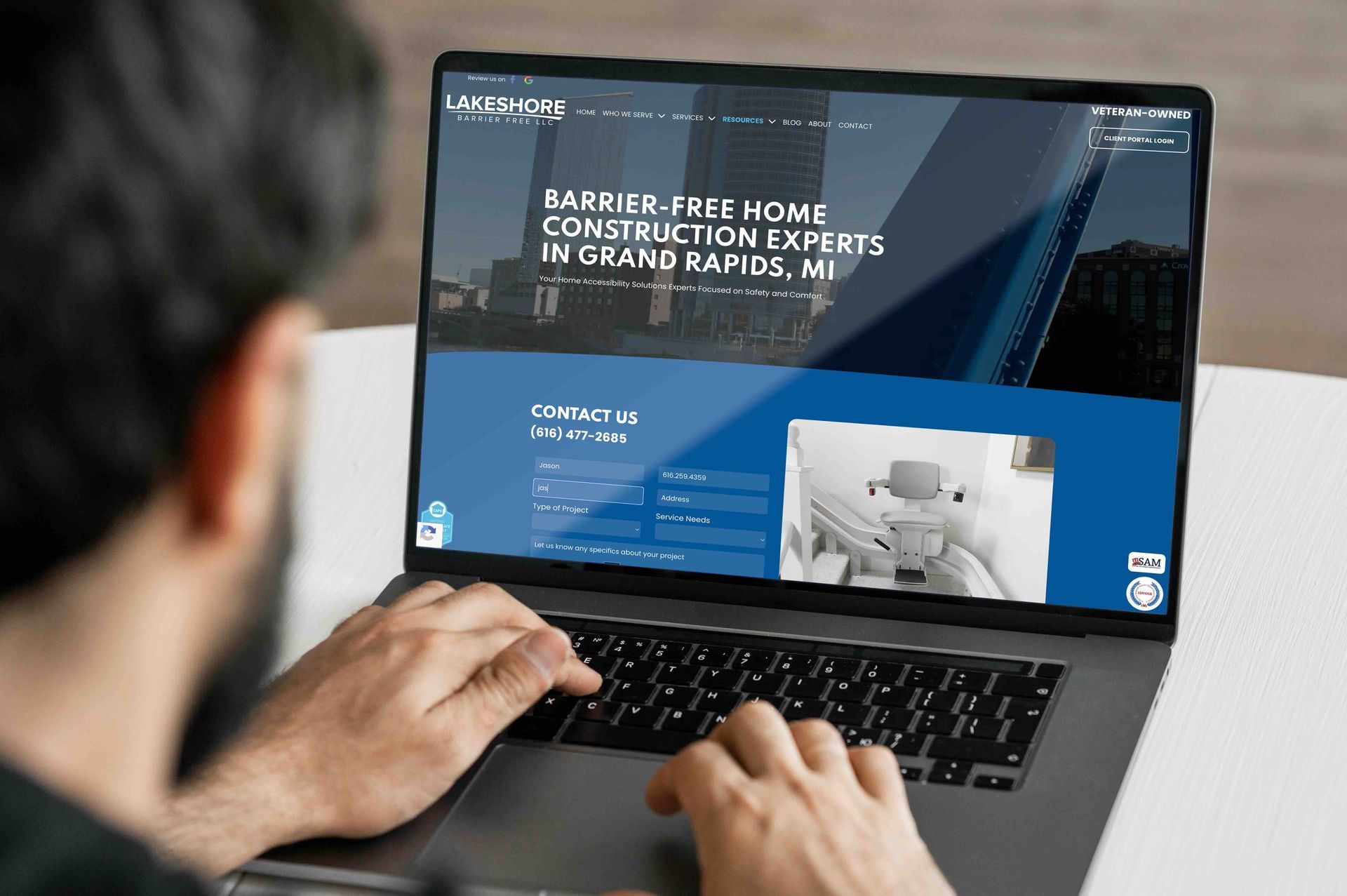
A man is typing on a laptop filling out a form on Lakeshore Barrier Free's website.

What a ranking service area page actually does

A service area page, also known as a location page, targets one specific city, town, or region you serve. Its job is simple: it should help a person in that area see that you do the work there, understand the problem you solve there, and feel ready to call.


That sounds easy, but most pages miss the mark. They swap the city name five times, add a stock photo, and call it done. Google has gotten much better at spotting that kind of thin content, especially after recent updates like the helpful content update that rewards helpful pages and exposes copy-and-paste tactics faster.

Search platforms also shape results using context like geographic relevance, location, and recent behavior. In other words, people don't all see the same thing. So your page has to match what someone in that place is likely looking for right now.


Google's service-area business guidance also makes one point pretty clear: list the areas you truly serve and don't try to prop up rankings with fake addresses. Building location pages like these properly, with solid search engine optimization for service businesses, helps improve organic search rankings and ties the whole system together.


If the only change from page to page is the city name, you're not building local pages, you're building doorway pages.


Pick markets with proof, not hope

Start with the areas that already show signs of demand. Look at past jobs, quote requests, driving range, profit margin, and how often people mention nearby towns on calls. Then build service area pages for your top markets first. Ensure your website service area pages follow a logical URL structure, like example.com/service-area/city-name.


A lot of businesses go too wide too soon. They create 40 city pages before proving that any of them can rank in local search results or convert. That's backwards. Build two or three strong service area pages first, then expand once you see traffic, calls, and impressions.


This is also where intent matters. A page for "emergency plumber in City" needs a different angle than a page for "weekly lawn care in City." One search is urgent. The other is more about trust, price, and recurring service. So pick the towns and the services that line up with how people actually buy in local search results, using this local seo strategy of testing small markets before expanding.


Write original local pages that deserve to exist

The best city landing pages read as if they belong to that city. They mention neighborhoods you actually visit, common property types, weather issues, travel expectations, and the kinds of jobs you get there. A roofer might mention storm damage patterns. A cleaning company might mention lake homes, rentals, or older downtown properties.


Local proof matters even more than local wording. Add a customer review from that area. Include before-and-after photos from nearby jobs. Mention response times or service patterns that are true for that market. If you use a template, keep it as a frame only and prioritize unique content over duplicate content. Even a good service area page template guide won't help if every city landing page sounds cloned.


A strong page usually includes:

  • A short intro that answers the main local need fast
  • One or two area-specific problems you solve
  • Proof from nearby customer reviews or projects
  • A clear call to action with realistic next steps


That's what makes a page feel real. That's also what makes Website Service Area Pages more citable for Google, Perplexity, Gemini, and ChatGPT.


Build the page for scanability, trust, and local intent

Once the content is unique, clean up the page structure while avoiding keyword stuffing. Google and AI systems both prefer pages that are easy to scan and easy to summarize.


Use clear title tags and meta descriptions with the service and city. Keep the H1 matching that focus. Make the opening paragraph direct. Add short subheads that answer obvious follow-up questions. Then include FAQ content, because it mirrors the way people search now.


You also want the page to support the rest of the site. Internal linking matters here. A weak, slow, confusing site can drag down even great city pages, which is why custom website design for service businesses still plays a big role. Well-built pages like these boost rankings in the local pack and on Google Maps.


A practical setup looks like this:

  • One primary service and one main location per page, suited for brick-and-mortar physical storefronts or hybrid businesses
  • Local photos, reviews, or case studies when possible
  • Schema markup like FAQ or LocalBusiness structured data, without made-up addresses
  • Strong internal linking to related services and nearby markets
  • Fast mobile load times and obvious contact options


Keep your Google Business Profile aligned with the places you truly serve, including consistent NAP (Name, Address, Phone) information. Your site, your profile, and your reviews should all tell the same local story.


Website Service Area Pages FAQ for Local SEO


How many service area pages should a business create?

Start with your top two to five markets. Then expand after you see that the service area pages rank, get traffic, and turn into leads.


Can I use the same copy on every city page?

No. Reused copy is the fastest way to create thin pages that feel like duplicates. Each page needs its own local angle and proof.


Should I build a page for every town nearby?

Not at first. Build pages only for places you actively serve and can support with real content.


Do service area pages help Google Business Profile rankings?

They can help support local relevance, especially when your website, reviews, local citations, and listed service areas all line up. They won't replace a well-managed profile.


What matters most on a service area page for local SEO?

Original content, clear local intent, and proof that you work in that area. Everything else supports those three things.


The pages that rank usually aren't the fanciest ones. They're the pages that make a local customer feel understood fast, and they give Google enough clear signals to trust what the page says.


If you treat each page like a real sales conversation for one town, your service area pages stop looking like filler and start working like assets for local SEO.


A woman is on a website looking at Brandon Snellink's agent page on the Cornerstoen Home Group's website.

How Service Area Pages Help You Rank in Google

Service area pages work best when they are built for real people, not just search engines. When you focus on local intent, unique content, and clear proof that you serve each area, these pages can help you rank better and bring in more leads from nearby towns. If you want help creating location pages that actually support your local SEO and turn searches into calls, Speck Designs can build them for your service-based business with a strategy that fits your market and goals.

Steven, the owner of Speck Designs in front of mountains.

The copywriting team at Speck Designs writes about branding, web design, SEO, content strategies, and much more for service-based businesses. Our goal is to publish clear, usable guidance you can apply right away, whether you are improving a local SEO foundation, building better landing pages, or tightening your brand message. We focus on what drives leads, not just traffic.


Ready to see how Speck Designs can help you keep your best clients and fuel business growth? Schedule your call today. Let's build lasting client partnerships through elevated customer engagement and powerful reputation management together.

Infographic comparing a thriving business with an online presence against a stagnant business without one.
By SD Team April 14, 2026
Can a website designer help grow your business? Yes, by building a site that earns trust, ranks in search, and turns visitors into real leads.
A person at a desk with a laptop points at their phone screen with a confused, frustrated expression.
By SD Team March 27, 2026
Why isn't my website showing up on Google? Learn how to fix indexing issues, weak rankings, and Google Business Profile problems for local SEO.
Google Ads webpage promoting AI to improve results, with a person working on a computer.
By SD Team March 25, 2026
Google Ads for service businesses in 2026, learn when they're worth it, what budget works, and how to track leads to booked jobs and real ROI.
SHOW MORE BLOGS